

THE NEW LUXURY IS CONNECTION: DARIA AND CYNTHIA ON BUILDING THE ROOMS PEOPLE WANT TO BELONG TO
Daria and Cynthia flew all the way from Berlin to Bangkok to launch their book, and that is how our paths crossed, one evening at Soho House Bangkok. Daria Suvorova-Konstandin and Cynthia Mensah-Neglokpe have spent years building spaces where women meet, share and connect. Daria founded Women Authors of Achievement, a podcast and community built around women’s stories. Cynthia Mensah-Neglokpe spent years leading luxury brands before founding Clicqui, a European-wide female network and community. Together, they wrote The Feeling of Berlin, a portrait of the city told through thirty-three women. In this Open Talks interview, we talk about community as an instinct rather than a strategy, why culture should lead and commerce follow, and what personal taste means when algorithms shape so much of what we see.
By Naz Kisnisci
19.11.2026
Hi Daria! Hi Cynthia! It was wonderful meeting both of you recently in Bangkok. For readers who might not know your work yet, how would each of you introduce yourselves, beyond titles?
D: In the past five years, I've had one foot in the corporate world and the other in the entrepreneurial one, where I've been building a podcast and community that's very dear to my heart. When it comes to my motto in life, it's all about staying curious. I love learning, exploring new industries and understanding how things work in this world.
C: I’ve always been very creative. I studied design, spent years in luxury and hospitality leading big brands, and later moved into tech and then started building my own projects. But next to the creativity, I’m honestly obsessed with people and what connects us. I’m the person who’ll randomly start talking to strangers on the street, because that’s what excites me most. That curiosity is what pulled me into community building, and eventually led us to write the book.
Let's start from the beginning. Daria, you grew up in Florida, and Cynthia, in Munich. What was it like growing up in Germany, and what eventually brought each of you to Berlin? And, of course, when did your paths first cross?
D: Love brought me to Germany, and I’m so grateful it did because it opened an entirely new chapter of my life. I’ve now been here for over ten years. Cynthia and I met through a mutual friend in 2023, and we immediately connected over our shared passion for giving women a stage, and our equally high standards for everything we create. Looking back, it feels like our paths were always going to cross.
C: Growing up in Munich gave me a strong sense of safety and stability. It’s a beautiful city, but quite conformist in many ways, with a very “orderly” lifestyle and clear expectations of how things are done. At some point, I started missing a more international energy and a bigger, more diverse feeling. Berlin offered exactly that: a place where you’re surrounded by totally different walks of life and where you’re almost invited to reinvent yourself. I recently read that moving cities is like supercharged self-development, because you’re no longer confined to who you’ve always been in your hometown, and that’s exactly how Berlin has felt for me.
Berlin isn't Paris, Milan, or London, yet it's become one of Europe's most influential creative capitals, known for its nightlife, its alternative culture, and a certain freedom of self-expression. Was that spirit always part of your own lives growing into who you are, and do you think the city still embodies that same freedom today, or is a new chapter of Berlin emerging?
D: Berlin definitely has that feeling of freedom, which still lives very strongly in its nightlife scene. This freedom is also carefully protected. It’s a city where you can discover who you are and shape your own identity. But to truly understand Berlin, you can’t just take from it; you have to contribute something too: your attention, your ideas, your point of view. If you remain anonymous or simply observe from the sidelines, you’ll never fully experience the city and what it can offer.
C: For everyone who doesn’t speak German, Berlin used to be described with the phrase “arm aber sexy” — poor but sexy. That line really captured a certain era of the city: it wasn’t polished or rich, but it had this raw, magnetic energy that drew people in. Even today, as a European capital, Berlin is still relatively affordable compared to many other major cities. It’s not what it was twenty years ago, but that lower cost of living still gives people a different kind of freedom. You’re not completely consumed by survival, which means you can experiment more, express yourself more, take creative risks. What makes Berlin special to me is its layers of creativity and subculture. If you’re curious enough to really explore the city, you’ll always find a corner, a scene, a crack in the surface where you feel like you belong. Berlin doesn’t hand that to you; you have to look for it.


Cynthia, you've described yourself as the child of immigrants. Daria, your work has always been about bringing people together across different worlds. How have those backgrounds shaped the way you build relationships and think about community, and what do you think people are actually searching for when they choose to join one today?
D: I personally love seeing people of different generations, backgrounds, cultures spend time together, whether through work or in their free time, because that's how you widen your perspective and grow. Some of the most important moments in my own life came from unexpected interactions where I was deeply moved by a personal story. So of course I aim to create similar environments for other people. Connection and shared stories can have a lasting impact on one's life.
C: When you’re a child of immigrants, you grow up watching your parents build community from zero, in a country that’s not theirs, often without speaking the language perfectly and without ready-made networks. You see how much effort and vulnerability goes into finding belonging. Because of that, community-building feels very natural to me. It’s almost like a reflex. And I’ve noticed that many people who start communities do so because they’ve felt a gap themselves — a need for a space that didn’t exist yet, especially for people with mixed or underrepresented backgrounds.
Daria, before founding Women Authors of Achievement, you were a competitive tennis player and later built a career across startups and entrepreneurship. Looking back, what experiences shaped the person you are today? And what ultimately inspired you to create WAA as a platform celebrating women across culture, business, and society?
D: I think every step in my life has shaped who I am today. The failures just as much as the wins. Tennis taught me discipline and resilience from a very young age, but the biggest lesson has been saying yes before I felt ready. Like many women, I've experienced imposter syndrome, yet every time I stepped outside my comfort zone, I grew, and that's exactly the mindset that inspired me to create Women Authors of Achievement.
Cynthia, before building Clicqui, you worked closely with fashion and creative brands. Could you tell us a bit about that journey, and what eventually led you to create one of Europe's most exciting female communities? What were you hoping to build that perhaps didn't exist yet?
C: My background is in brand and design. I studied design and later worked in the luxury industry, including six very formative years at LVMH. Those experiences taught me how powerful a clear identity and visual language can be: when you know exactly what you stand for and how you express it, you naturally attract the right people. When I started building clicqui, it was never about putting myself at the center. It was about the vibe and the feeling we wanted to create. We focused on a strong, coherent brand world that spoke to a specific type of woman, so we didn’t need endless questionnaires or complicated targeting. The brand itself became a filter, and the right people recognized themselves in it.
Let's talk about The Feeling of Berlin. What made you decide to write a book together in the first place? For those who might have an idea they've always wanted to pursue, what does the reality of bringing a project like this to life actually look like?
D & C: After running communities for years, we both felt that the incredible stories of the women we'd met in Berlin deserved to be put on paper. We started working on the book before everything was figured out. What’s important is that we had a clear vision, a lot of motivation, and trusted that the rest would come together. We think that's true for most projects: you don't need to have everything in place before you begin.
The book tells the story of Berlin through the lives and perspectives of 33 women. Why was it important to make women the lens through which the city is understood? And in an era shaped by algorithms, short-form content, and constant consumption, why did a book feel like the right medium for telling this story?
D & C: Let’s be honest: a lot of people are craving quality curation more than ever. We're overwhelmed by endless digital content, but there's something very special about discovering a city through the eyes of people who genuinely know and love it. Our 33 women each have their own perspective on Berlin, and together they create a much more personal and authentic guide than any algorithm ever could.
Many of today's most successful cultural platforms are expected to be everything at once: a community, a brand, a media platform, an experience, and ultimately a sustainable business. How do you think about the commercial side of what you do without allowing it to dilute the culture, taste, and authenticity that attracted people in the first place?
D & C: The commercial side should always follow the culture, not lead it. The moment monetization starts dictating decisions too early, you risk losing what made it special. We think a lot about alignment, partnerships, formats, growth — everything has to feel coherent with the original intention. Otherwise, people feel it immediately.
Do you think women build community differently from men, and if so, what actually distinguishes a female-led space? The language of empowerment gets used so often now it's almost lost meaning. Stripped of the slogans and the branding, what does real empowerment look like in the rooms you build?
D: For me, real empowerment is creating a space where people feel comfortable being themselves. You don't have to fit a certain mold. We want people to come with openness, put themselves out there, connect, and learn from one another, but never feel like they have to be someone they're not. That's very important: to create that exact feeling, and you can sense it the moment you enter the room.
C: Yes, absolutely. The spaces women build tend to have a different emotional texture: there’s more empathy, and a deeper kind of connection that feels very close to how female friendships work. For me, empowerment is simply about collaboration. It’s moving away from the idea that there’s room for only one woman at the top.


The gatherings you both curate are never just about who shows up. Fashion and styling are part of the room too. How much does that actually matter to you, and what role does fashion play in the spaces you build?
D: We both love dressing up, but for us it's about much more than fashion. It's a way of showing respect for our guests, for the audience, and for the experience we're creating together. When we invite people to a dinner or a panel, we want it to feel like a special occasion, and how we all choose to show up is part of creating that unforgettable experience.
C: And let’s be honest, I think we generally need more reasons to dress up for: when people feel good in what they’re wearing, the whole atmosphere becomes warmer, more open, and more alive.
Fashion has clearly played a role in both of your lives, in different ways. How would you describe your personal relationship with fashion today? And has how you dress ever actually changed a room for you, walking into a meeting, a first conversation, a negotiation?
D: Fashion has always been important to me because of my mum, but never in the sense of chasing trends. She taught me to appreciate timeless pieces and quality fabrics. To me, personal style is something that naturally evolves throughout your life. It grows with you as you come to understand yourself better.
C: For me, fashion is energy, because I can show the outside world who I am, or define how I want to be perceived, so it’s a bit like a magic trick. When I dress in a way that feels true to me, I feel more confident and grounded, and that changes how I enter a room.
Bangkok was the first stop on your global book tour, and for both of you, one of your first deeper experiences in the region. Before arriving, what expectations or assumptions did you have about the city? And what surprised you the most once you experienced it firsthand?
D: I expected Bangkok to be incredibly busy and energetic, and it definitely was! But what surprised me most was the warmth of the people and how thoughtful everyone was. And, of course, my taste buds absolutely exploded after discovering all those incredible flavours and fruits. I still crave the coconut ice cream we had, right, Cynthia?
C: What surprised me most were actually the moments before we even met in person. The prep calls for our panels were some of the most fun I’ve ever had; we laughed so much and somehow connected on a deeper level through a screen. By the time we landed, it already felt like there was a shared energy waiting for us. Being there, I realised Bangkok has so much more to offer than what you usually see online. There’s a warmth and depth to the city — and to the people we met — that doesn’t always make it into the glossy version, and it’s up to all of us to look for that part of the city as well.


Staying with Bangkok for a moment, what stood out to you about the women, the sense of style, and the way creativity expresses itself here? Did you notice anything that felt particularly different from Europe?
D & C: Meeting our panelists, Patararin Pongprasit, Fah Chak, and the founders of Table of Hands, really showed us the incredible sense of style and taste Thai women have. It also made us realise how important it is to share a different narrative of Bangkok with the world. One that reflects its contemporary design and culture, rather than the typical tourist perspective. We definitely need more of those stories.
Tokyo and Seoul followed Bangkok on this trip, three cities with very different energy. Was there a specific moment in either city, something about the women, the style, or just the pace of life there, that caught you off guard?
D & C: Every city we hosted an event in felt completely different. What really stayed with us was how warmly our format was received and how much our panelists contributed to the conversations. Despite all our cultural differences, there was a genuine mutual respect, and it reminded us how powerful it is when women come together to share their perspectives.
What qualities do you think modern female leadership requires today that perhaps previous generations didn't need in quite the same way?
D: I think women today have a bigger voice and a bigger platform than ever before, and it's important that we continue to utilise it. The generations before us paved the way, often the hard way, and now we have the opportunity to lead in our own way instead of trying to fit into one mold. I think our different personalities and perspectives are our greatest strength, and that's exactly what we should bring into leadership.
C: Women often lead differently than men, but for a long time, the higher they went, the more they found themselves in very traditional, male leadership cultures. Modern female leadership, to me, is about being able to move in those spaces without mirroring them completely. Earlier generations fought to get into the room; now many of us are there, and the real work is to change how the room operates instead of just adapting to it.
Women are told to support each other, but working relationships between women can get complicated by competition or unspoken expectations. Writing a book together tests any relationship. What did making The Feeling of Berlin actually teach you about each other, and about working with women in general?
D & C: Working so closely together taught us that the strength of our partnership comes from understanding and respecting our differences. Like any relationship, it takes honest communication and accepting that there isn't always one right way. In the end, we've probably learned as much about ourselves as we have about each other, and that's been one of the greatest gifts of working together.
What's something in fashion right now that most people aren't paying attention to yet, but you think they should be?
D: As AI makes fashion and content easier to replicate, what will really stand out is how you treat people, what you stand for and how you build relationships. Personal taste will matter even more, but I think your value system and genuine human connection are becoming the new luxury.
C: I think we’re underestimating how much social media has made everything look the same, everywhere. What really interests me is the opposite movement: a stronger focus on independent international designers, traditional clothing rooted in culture, and pieces that carry real craftsmanship and story. Thanks to social media, these designers suddenly have access to a global audience, and I think that’s where a lot of the most exciting fashion is happening.
At Soho House Bangkok, the conversation revolved around personal taste in the age of AI. We heard many perspectives that evening, but never really yours. What does personal taste mean to you? And in a world where algorithms increasingly shape what we see and consume, how do we protect our individuality?
D: For me, personal taste is knowing what genuinely resonates with you and being confident enough not to like something just because everyone else does. At the same time, I always stay curious. I love discovering new music, fashion, art, or ideas, but what usually changes my perspective is when I learn it through another person's story. When someone shares why something matters to them, that's when I'm most open to seeing it differently.
C: For me, personal taste starts with looking inward rather than outward. It’s shaped by the culture and environments you grew up in, but in the end it’s about what genuinely gives you joy and makes you feel like yourself. Honestly, we can’t follow every trend anymore anyway. My mum used to say she had to change her wardrobe every six months to not be out of style; now everything is more fluid, everything “goes”. That’s why I think it’s better to wear what feels true to you, instead of trying to keep up with every new micro‑trend the algorithm throws at you.
Europe has long positioned itself as the reference point for taste and creative authority. After spending real time in Asia, do you think that position still holds, or did something about it start to shift for you?
D: Every culture has something unique to offer, and we're incredibly lucky to live in a world where we can learn from one another. Spending time across Bangkok, Tokyo, Seoul, and Hong Kong only reinforced that for me. I came back with so much inspiration and a deep appreciation for the incredible level of craftsmanship and taste.
C: I actually think we were tricked into the idea of European creative authority, partly because we weren’t truly exposed to the rest. With everything in life it comes down to “Who sets the standard?” vs. “How many different standards have we not been looking at yet?”
Is there a moment, a conversation, a quote, or a person that genuinely shifted how you see community, or how you see yourselves, and has stayed with you since?
D: I was talking to someone in Japan and she said to imagine that every person has an invisible box around them. It makes you think about how your presence, your words, and even the noise you create affect the people around you. I loved that. Being mindful not just of yourself, but of the space you share with others.
C: One of the biggest shifts for me came on this tour, moving so fast between cities. Every place had its own pace and its own way of gathering, but what really stayed with me was how familiar it felt when women came together in a room. Seeing that repeat itself in completely different cultures changed how I see what I do: it’s less about “building” community and more about creating conditions where that kind of connection can happen again and again.
Walk us through your perfect day in Berlin: coffee, restaurants, bookstores, shopping, music, nightlife, and perhaps even a good date spot. Give us the local recommendations we won't find in a tourist guide. Feel free to share two or three favourites for each.
D & C:
- Breakfast at Orania Hotel
- Books & Magazines at Do You Read Me?!
- Lunch at Chipperfield Kantine
- Afternoon Coffee at Acid or Sofi
- Culture at Neue Nationalgalerie, or James Turrell Cathedral
- Dinner & Drinks at Bar Basta or Barra
- Natural Wines at Vinotopia, Le Balto or the Rad
Which brands or designers are exciting you most right now?
D: I love jewellery and seeing what young designers are creating today. I'm always on the lookout for a new pinky ring, so if you have a recommendation, let me know!
C: I think there are amazing Nigerian and Indian designers that combine traditional clothing with modern silhouettes, and it's just so unique. Hertunba is one of my faves to watch.
At Balcone, we've always believed that fashion is about much more than products. It's also about culture, community, and creating space for independent designers and new creative voices to be seen. Do you think the industry needs more platforms built around these values? And what makes people feel that they truly belong to a fashion community rather than simply shop from it?
D: I love that we’re in an era where independent brands and artists can reach people like never before, thanks to social media. If you believe in your product and are good at what you do, people who resonate with it can find you so much faster. That’s a really positive power of social media.
C: For me, fashion is so much about identity and heritage. So yes, we need way more platforms championing different designers and different voices, so everyone can find pieces that actually feel like them. And honestly, go explore beyond social media too. When you travel, look for the small designers. Coming from luxury, craftsmanship has always been a big thing for me. And now that everything starts to look the same and kind of beige, I think people will crave that authenticity even more.
Do you have a favourite saying or expression in German? Tell us the original version, and what it means to you personally.
C: One of my favourite German sayings is: „Es ist nicht alles Gold, was glänzt.“ For me, it’s a gentle reminder that the grass isn’t always greener on the other side and that not everything that looks shiny and polished really is. Especially in a world of filters, algorithms and screens, we should remember that real life is always a bit messier than it looks online.
Finally, I always end with the same question. If you could give one piece of advice to young creatives trying to find their path today, what would it be?
D: Don't build a life that's a copy of someone else's. You're given one unique life and the opportunity to create something of your own, so do it.
C: Don’t let societal norms get in the way of your creativity. Don’t be scared to try new things, fail at them and try again. That’s actually where the best ideas are born.
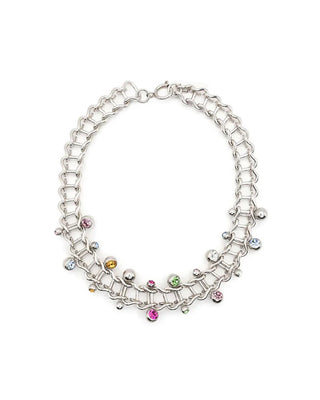
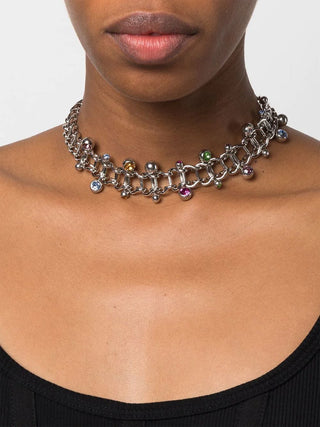
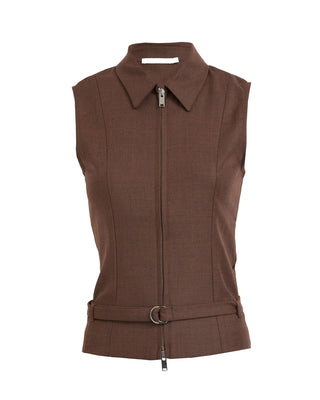
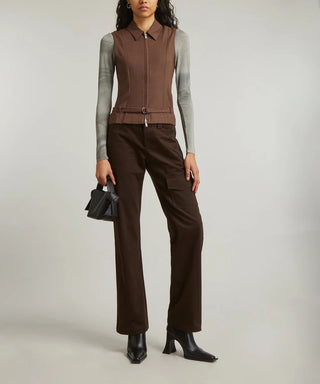
DARIA'S & CYNTHIA'S PICKS