
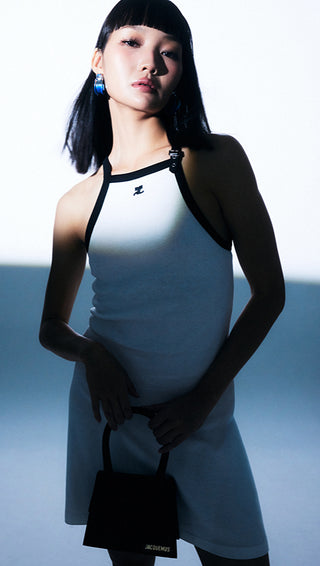

Kang Dongmin Was Once Called Too Much. A Decade Later, PAP Magazine Is One of Korea’s Leading Independent Fashion Platforms.
This might be one of the most meaningful interviews I have done, close to my heart, and timed at PAP Magazine's 10th year anniversary. We met in 2016, two students at Istituto Marangoni in Milan with no idea what came next. What followed were years of working together, and somewhere along the way, he became a friend I know I can always count on. For 5 years, my role as fashion director at PAP meant a front row seat to all of it, watching him not only as a friend but as someone who never once let go of his own vision, even as people once dismissed it as too much, until that changed. Today, Seoul and Milan based PAP Magazine earned its place as one of the industry’s most respected independent platforms and stands as a global reference point for fashion, beauty, and culture. In this Open Talks interview, I sit down with my dear friend, founder and editor-in-chief Kang Domenico Dongmin, to talk about being the outsider who became the insider, the discipline behind an uncompromising vision, and what ten years of pure conviction actually looks like from the inside.
By Naz Kisnisci
14.07.2026
Hi Dongmin! It's funny to be doing this interview with you. We've known each other since our student days in Milan almost ten years ago, and we've shared quite a journey along the way. For those who may not know you yet, could you introduce yourself and tell us a bit about your background and what you do today?
Hi, it really is surreal to be sitting down for an interview with you of all people. I'm Kang Dongmin (Domenico Kang is my Italian name). I was born and raised in a city just outside Seoul, and as you know, I moved to Milan in my late twenties to study fashion. Today, I'm the founder and editor-in-chief of PAP Magazine, splitting my time between Seoul and Milan. PAP is a global digital magazine built on editorial and archiving, covering fashion, beauty, art, and culture. It started with collaborating with creative teams around the world to produce editorials every month, and it's since grown into curation, articles, celebrity news, and brand campaigns through PAP Studios. To put it simply: my job is building a space where creative people come together and share inspiration.
Let's start from the beginning. You were born and raised in Seoul, a city that today is often seen as one of the world's most influential cultural capitals. What was Seoul like when you were growing up? Was fashion, image, and personal style already an important part of everyday life?
When I was a teenager, in the late '90s and early 2000s, Korea wasn't the trend-leading country it is now. You know that as well as I do. But I think the seeds were already being planted back then. The Dongdaemun (DDP) area was kind of a holy ground for kids who loved fashion, and honestly the roots of today's Korean fashion were already growing right there. My friends and I loved dressing up. I still vividly remember buying whatever was trending and showing it off to each other. It wasn't anything grand, but looking back, that was my first real sense of "style."
Korea's influence on global culture has grown enormously over the past decade, from fashion and beauty to music and entertainment. Does the world's fascination with Korean culture surprise you, or did you always feel this moment would eventually come?
Honestly, it's both. It surprises me, but there's also a sense of "of course this happened." When I was a teenager, Korea was following trends, not making them. But even then, places like Dongdaemun were already boiling with this intense energy. Koreans have a particular speed and persistence. They absorb something insanely fast and then remake it in their own way. Whether it's music, fashion, or beauty, once it crossed a tipping point, it just exploded all at once. So I don't see this as a lucky trend. I see it as energy that had been building for a long time, finally showing its true shape.
I know you're a private person and haven't spoken about this much publicly. What were your childhood and teenage years actually like? Were you drawn to fashion and art early, or did it come later? And when was the first moment you thought: this is the world I want to be in?
Honestly, when I was young, I was more of an athlete than a fashion kid. I did care about dressing up and how I looked, but I was completely obsessed with football. I played on the school team and basically grew up doing nothing but sports. In high school I even spent two years at a prep academy trying to get into a sports university. But I didn't get the result I wanted, and I drifted for a while after that.
The turning point came after I finished my military service. One of the friends I met around then, a guy named Choi Paper, was really into fashion, and we'd always go shopping together. That's how I naturally fell into loving fashion myself. There wasn't some grand moment where I decided "I have to be in this world" — it was more that what I loved slowly shifted over time.
You grew up in a family of veterinarians, which is quite different from the path you eventually chose. How did your parents react when you decided to pursue a creative career? Were they supportive from the beginning, or did it take time for them to understand your direction?
Since I'd already failed the sports-university route, my family really didn't want me heading into another arts-and-athletics path. So I enrolled in business school and spent my twenties more or less the way my parents wanted. But the more I fell for fashion, the less business studies held my attention. I'd spend five, six hours a day digging through online communities and blogs, studying nothing but fashion, thinking about nothing but fashion.
Then, at some point, it hit me that I couldn't keep living a life I didn't actually want. I convinced my parents, and at the relatively late age of my late twenties, I set off to study in Italy. It wasn't an easy decision, and it definitely wasn't an easy thing to convince them of. But looking back now, finding the courage to do it was the real starting point of PAP.

Kang Domenico Dongmin during Milan Fashion Week, before Etro show

Kang Domenico Dongmn with Naz Kisnisci during Milan Fashion Week, shot by Darrel Hunter

Kang Domenico Donmin during Milan Fashion Week, before Diesel Show, shot by Jimin Jeon
How did you decide to move to Milan? And what were those early years actually like studying, figuring it out, being far from home for the first time?
I actually wanted to go to London at first. I thought London fashion suited me better. But the girlfriend I was dating at the time was moving to Milan to study, so I decided on Milan too. I didn't have a long runway to prepare, and Marangoni being a school you could get into with relatively short prep played a part as well. The truth is, what mattered most to me back then was simply getting out of Korea and learning European fashion culture firsthand. That was the whole point, so whether it was Paris, London, Milan, or New York. Any one of them was fine by me.
When I first arrived, the hardest part was definitely the language. My English and Italian were both shaky, so I learned the language and studied fashion by basically throwing myself at it head-on. During the intensive course before starting my master's, I barely slept. Maybe three hours a night? The other students couldn't understand why I pushed myself that hard, but I genuinely believed this was the last chance of my life. There were so many cultural differences and it was tough, but looking back, all of those hard things became the nourishment that made me who I am.
Let's get into PAP. How did it really start? Not the polished version, the actual beginning. And what makes it different from everything else that exists?
Let me be honest, there was no grand plan. Around that time I was running an Instagram account where I archived things that inspired me. At the same time, I was doing everything I could to become a proper professional stylist. And through that, I came to realize just how important a "platform" is. I understood that if a publication had my back, the range of what I could do would expand enormously.
But as you'd know, getting that kind of support from a publication wasn't easy. I worked so hard trying to get pull letters for samples, but the return on the time I was pouring in just wasn't there. So at some point I thought, "You know what, if it's going to be like this, I'll just make my own magazine." That's how I named my archive account "PAP Magazine" and started developing the Instagram like an actual magazine.
And strangely enough, followers who appreciated my taste grew at a speed I never imagined. Creators wanting to collaborate with PAP started flooding in. Honestly, I still can't quite believe how it got to this point. I think simply doing what I wanted to do, over and over, without overthinking it, is what ultimately created this result.
What makes PAP different is that we're not a magazine looking down from above. We don't dictate trends. We stand right next to the people making things. Like the PAP slogan goes, "Different minds, one obsession: creativity." We come from different backgrounds and different fields, but we're bound by that one thing: being obsessed with creativity. That's the core that hasn't changed once in ten years.
Building something from scratch in a city like Milan -where the fashion industry demands you prove yourself, and where being an outsider is never invisible- how hard was it in the beginning? What did those early years of building PAP look like on the ground?
Back then, the general perception of Asians in Milan wasn't as warm as it is now. Bias against Asians was far more common, and to many Italians, I was simply "that Asian outsider who dresses strangely." Since I already loved standing-out, eye-catching styles, I had to endure an extra share of cold stares and prejudice.
To start my career as a stylist, I went around knocking on PR agency doors, trying to borrow clothes for shoots. But the doors of Milan's fashion world, so steeped in history, tradition, and conservatism, weren't going to open easily for a young Asian student with a thin portfolio. Once, when I visited a PR agency, the staff thought I couldn't understand Italian and whispered cynically among themselves, "Quel ragazzo asiatico è di nuovo qui, perché continua a venire a disturbarci?", "That Asian kid is here again, why does he keep coming and bothering us?" That cold air is still vivid in my memory.
But I pushed through with my particular stubbornness. I started by knocking on the smallest independent PR agencies, and with the few clothes I managed to borrow, I'd stay up all night creating high-quality results. As I proved my worth through nothing but skill and visuals, their prejudice and attitude toward me started to shift. slowly, but surely. Over time they came to recognize me as a creator, and eventually we built enough trust that they'd readily offer me good pieces first.
Around that period, working for a year and a half as an assistant to two local editors, learning the inner workings of the fashion system with my whole body, became a huge asset too. Grinding it out in the field like that, I came to a fundamental realization: if I wanted to bring the editorials I envisioned to life without constraints, I'd ultimately need my own platform. That realization is exactly what led to the magazine called PAP.

Balcone's summer campaign. Exclusive collaboration with PAP Magazine

PAP Magazine Editorial Cover

PAP Magazine editorial - all rights reserved to PAP Magazine
When you think about those early Milan years, are there any moments, people, collaborations, or experiences that particularly stand out for you?
A few people come to mind. First, Javier (Veleiro C.)He helped me so much in my early Milan days. He was practically my teacher. He taught me a lot of the language and a lot about Western culture. Without him, the person I am now would absolutely not exist.
Then there's Alessandro (Lo Faro). When I was trying to make something happen as a stylist, he did a lot of personal projects and magazine shoots with me. He's an incredibly sharp photographer with a brilliant aesthetic eye, and I learned a lot from him about seeing things from a new perspective.
And finally, Naz (Kisnisci). That's you (laughs). Working on the magazine with you was when I first thought I should turn PAP, which had basically been a hobby, into a business. You're genuinely smart, and you love taking on new challenges, which is exactly why I'm so excited to see where Balcone goes next.
At some point PAP stopped being just an editorial project and became something much larger, a fashion, media, and culture platform. How did that expansion happen? Was it planned, or did it follow the work?
The work led the way. At first, I only did editorials, but as I kept making them, questions naturally came up. Who's seeing this work? What more do they want? That's how curation got added, then articles, then celebrity news. As the audience grew, I could see they wanted to do more than just look. They wanted to participate. So now we're moving toward being a platform that shares inspiration together, rather than a magazine that hands out information one way. It wasn't that I wrote a strategy document first and then moved. It's more than the work kept opening the next door.
When COVID hit, you moved back to Seoul after years in Milan. How was that transition going back to a city you knew intimately but had left behind? And how did that move change PAP?
Honestly, when COVID brought me back to Korea, I felt completely lost. Italy had ground to a halt at that point, and that state dragged on for quite a while. Coming back to Korea almost like I was being chased, I survived by trying whatever opportunities I could get my hands on. It was a really hard time. Then one day someone around me suggested, "Why don't we create PAP Korea?" and that's how a new challenge began. Looking back, that disorienting return is what ended up bringing PAP onto a completely new stage: Korea.
I remember PAP operating from a small office in Gangnam during those early Seoul days. At what point did you realise that PAP was starting to gain real momentum and recognition in Korea?
The truth is, not long after starting PAP Korea, a huge problem blew up. My business partner, the CEO, embezzled and burned through all the money we'd raised. I borrowed money from people around me and paid it all back. At the time I was the editor-in-chief, not the CEO, but people had invested looking at me and the PAP name, so I couldn't let that name be tarnished. And my own pride wouldn't allow it to end ruined like that.
COVID was just starting to settle a bit, so folding PAP Korea and going back to Milan was genuinely one option. But I'm the kind of person who has to see things through once I start, and with the thought that I had to take responsibility for the few staff who'd followed me, I ended up driving PAP Korea forward on my own. At first I got by bouncing around a cramped shared office. Six months of that, and then a like-minded friend came along and we shared an office together. Two years later, we moved into our own independent space. It's still not big, but it's exactly the right size for where we are now.
Back then PAP already had a certain reputation in Europe, but in Korea, outside of a handful of fashion-industry people, almost no one knew us. So it was basically starting again from zero. In Europe and other more conservative countries, there's still this air of not fully recognizing digital media as legitimate media. But in Korea, which adopts everything so fast, the prejudice against digital media is disappearing quickly. Even big corporations that already own legacy magazines are spinning up several digital magazines each to represent their companies.
I run a magazine that, at least for now, hasn't taken corporate investment, one that my editors and I built with our own hands. When people around us recognize us as real media, invite us to shows, and ask us to collaborate on all sorts of events, that's when I feel it: "Ah, we're being recognized." I feel endless gratitude for those things, while also knowing full well that there's still a long way to go before I reach where I'm aiming.

Balcone's summer campaign exclusively for PAP Magazine - all rights are reserved to Balcone

PAP Magazine visit to the Comme des Garçons Homme Plus and Junya Watanabe 2026 Spring/Summer Re-See.

PAP Magazine editorial - all rights reserved to PAP Magazine
You attend fashion weeks across the world and PAP has become a recognisable presence in those spaces, from Gigi Hadid appearing with a PAP microphone to ATEEZ's Seonghwa at Songzio. What does being on the ground at fashion week actually look like for you and for PAP in general?
From the outside it looks glamorous, but the reality on the ground is incredibly fast and hectic. For us, fashion week isn't a place to watch shows — it's a place to report intensely and to build relationships. It's about actually meeting designers, creatives, and people from other media face to face.
Those moments, Gigi Hadid holding a PAP microphone, or Seonghwa with us at Songzio, weren't made because we chased them down. They were signals that the PAP name naturally resonates in those spaces. The fact that a small indie magazine became something people recognize on the ground in both Milan and Seoul is, I think, the result of consistency built up over the past ten years, starting in Milan.
Beyond PAP, you've also developed a very distinct personal style. How would you describe your relationship with fashion today? And what role does personal style play in your life?
For me, fashion is the deepest identity within me, and the most important tool for visualizing my complicated mind. What I wear is ultimately a product that directly reflects my thoughts and the complex standards I hold inside.
In a way, I might be closer to a "dreamer" who's a little detached from reality. But I'm not someone who just dreams. I'm someone who wants to drag those imagined worlds into reality somehow. Just look at how AI has developed recently. Because of the anticipation that surreal worlds I'd only pictured in my head might arrive in front of me far faster than expected, lately I find myself imagining a creative future even more.
The truth is, to the me of twelve years ago, just arriving in Milan, the idea of building a magazine and becoming an editor-in-chief was an absurd fantasy. But I kept imagining it, and I kept throwing myself at making it real. And of course, I was genuinely, gratefully lucky too.
For me, the very process of imagining something and making it real is more enjoyable than I can put into words. So even at this very moment I'm still imagining a future version of myself, and I think of my style as one movement toward that imagined future.
Having lived and worked extensively in both Europe and Asia, do you notice fundamental differences in how people engage with fashion and creativity, between Milan and Seoul, between one continent and the other? And what has moving between those worlds taught you about building something that actually travels?
Milan and Seoul are genuinely, completely different cities. And the charm and strengths of each are so distinct.
Milan moves on long history, deep tradition, craftsmanship, and a solid, classic system. Seoul, on the other hand, is incredibly dynamic and fast, a city where the capacity to soak up new trends and technology like a sponge is maxed out.
I constantly try to hold the wildly different strengths of both cities inside me. Like what I learned in Milan, I keep the essence and direction of our platform weighty and explore it deeply, while at the same time keeping pace with Seoul's speed, not missing the trends rushing toward us and digesting them flexibly.
The biggest lesson I learned moving fiercely between these two polar-opposite environments is this: what moves people's hearts across borders, around the world, is not the shiny "wrapping" the trend. No matter where we are or what language we speak, the real force that captivates people lies in the irreplaceable identity and originality that only that brand or platform has. Even when the cultural background is different, true originality ends up crossing borders anyway.
Fashion schools teach craft and vision, but rarely how to turn creativity into a business. You've done both successfully, across two continents, while keeping a strong creative identity and a commercial reality in balance. How did you actually figure that out?
Honestly, I didn't know from the start, I learned by colliding with it. But one principle was clear: I don't sell my identity to make money. Whether it's an ad or a collaboration, if it doesn't match PAP's taste, I don't do it. And ironically, that turned out to be the right call commercially too. Because we're consistent, advertisers recognize the value of "something PAP vouches for."
I was lucky in that, before starting the business, I already had something solid and good in my hands. And I laid the business on top of that material. In fact, starting PAP Korea. PAP and PAP Korea are now merged into one, there was an element of being almost pushed into business by the fierce competition in Korea. It was really hard at the time, but in hindsight it might actually have worked out for the better.
For what it's worth, you know I studied business in my twenties at my parents' urging. I spent more than half of my twenties on it, so it was a pretty long stretch. Of course, being a student who was more interested in fashion, I can't claim I was 100% focused. but it definitely helped in some ways.
In the end, what I learned is that order matters. Creativity and commerce aren't enemies. You make something genuinely good first, and once it's solid enough, you lay the business model on top of it. Do it the other way around and you lose both.
PAP has built a highly engaged and organic audience over the years. What have you actually learned about building community rather than simply building followers? What separates the brands and platforms that are genuinely doing it right from those that aren't?
Followers are a number; community is a relationship. I think that's the heart of it.
A lot of brands chase reach and numbers and end up forgetting why those people stay in the first place. What we learned is that the reason people come to PAP is that it's clear what we love. There's consistency in our taste, and we don't just post anything. The ones doing it right see their audience not as ad targets, but as people who love the same things. The ones who aren't buy or chase engagement instead of building it. Real community builds slowly, but it never wavers.
PAP Studios has also become an important part of the business. Could you tell us more about the studio and some of the recent projects you've particularly enjoyed?
PAP Studios is the creative and production studio that PAP runs directly. What I and PAP do best is ultimately making content, and among that, creating a campaign that represents a brand's season is genuinely rewarding work.
Making editorials based on our own publication's concept is fascinating, but creating a campaign that becomes the face of another brand's season has a different kind of joy. Above all, I love the process itself, understanding their concept, empathizing with the way they want to express themselves visually, and producing a result they'll be happy with. It's work where I'm making what someone else wants rather than what I want, but within that, learning empathy for others and how to communicate, I feel myself growing every single time. And of course, campaign production also plays a solid role as PAP's cash cow.
The one that stands out most recently is a shoot with the design brand COOR in the Dolomites. It was a fantastic location, which also meant it wasn't easy. but that's exactly why it stays with me. It's also the most recent work we've done.
Last year PAP featured Balcone's campaign, which was a meaningful collaboration for us. More generally, what kind of independent platforms, brands, or creative projects tend to catch your attention today?
The Balcone campaign was a meaningful piece of work for us too. Honestly, it's a good example of the kind of places we're drawn to. I tend to be pulled in by perspective more than scale. Places that, however small, have their own clear point of view, and that try to create trends rather than chase them.
Among independent brands, I'm watching Ottolinger, 2000archives, and Avavav with interest. For magazines, I keep up with Puss Puss and Behind The Blinds. And digital media like Outpump is shifting the perspective of somewhat conservative Italian media, so I'm paying particular attention to them. In the end, what I'm looking at comes down to one thing are these people doing something genuinely their own, not something borrowed from somewhere?

Kang Domenico Dongmin and Naz Kisnisci during Milan Fashion Week before MSGM show in 2021

Pap Studios production for Umbro Korea - all rights reserved to Pap Magazine and PAP Studios

Pap Studios production for Umbro Korea - all rights reserved to Pap Magazine and PAP Studios
The idea of "luxury" is always evolving and changing in the fashion industry. How would you define luxury in fashion right now, and what does it personally mean to you?
Luxury moved away from logos and prices a long time ago. Real luxury now, I think, is "intention" , something with a clear reason for being made, carrying a perspective no one else can imitate. In an age of fast consumption and forgetting, something made by taking time over it, that's luxury.
Personally, luxury for me is "the freedom to choose." Being able to turn down work I don't want to do, being able to drive PAP according to my own taste. That's more extravagant than any object.
At Balcone, we spend a lot of time championing emerging designers and independent brands. In today's industry, where attention spans are shorter than ever, what does it actually take for a young brand to stand out? What do you actually look for in an emerging brand? And do you wear them yourself?
With attention spans getting extremely short and new brands pouring out every day, what a young brand needs most to survive, I think, is an uncompromising, unbreakable, solid worldview. Brands that chase trends and dress themselves up nicely get forgotten quickly, but brands with their own firm originality end up surviving.
That's exactly what I look at most closely when I'm assessing an emerging brand: "What question is this brand throwing at the world, and how original is the way it answers it?"
Brands that are now firmly established in the global fashion scene, like Heliot Emil, Egonlab, or Avavav, all started as very small, experimental emerging brands too. The reason they reached their current position is that instead of following the obvious rules of the market, they pushed their own singular identity, precisely calculated futurism, surreal wit, all the way to the end. The moment I discover that kind of raw, unprocessed courage and creativity in emerging designers is when I feel the biggest thrill.
Naturally, I love wearing pieces from emerging fashion brands myself. For me, fashion is a tool for expressing my identity, so rather than the safe choices of mainstream brands, I feel my style comes together in a way that's far more fun and more "me" when I mix and match the bold, experimental pieces of emerging brands.
Balcone keeps discovering and shining a light on worthwhile emerging brands and it recognizes their value before everyone else does.
Social media has transformed fashion, media, and culture. Do you think it has ultimately made creativity more democratic, or has it simply created new forms of pressure?
Both. It definitely removed the barrier to entry. In the past you had to be in a print magazine to be seen, but now anyone can show their work to the world. PAP was able to start thanks to that too.
But the price is that everyone ended up serving the same master: the algorithm. Chase likes and reach long enough and you get this pressure that makes everything end up looking the same. So what matters to us is protecting perspective, not numbers. What got democratized is "access," not "attention." In the end, only people with their own clear voice survive.
Fashion is often dismissed as superficial by people outside the industry. After spending years working within it, what do you think people still misunderstand about our industry?
A lot of people reduce fashion to simply "picking out and wearing pretty clothes." But fashion is actually closer to a visual language that shows, at the very front line, what an era desires and what it fears. It's a product woven out of social change, economic currents, and the collective psychology of the public.
People only see the glamorous few minutes on the runway, but behind that there's cold, hard data analysis to predict trends, the rough labor of countless workers, and an intensity that adjusts details down to the millimeter.
Another misunderstanding I really want to address is how easily people underestimate fashion. Reaching the point where something looks natural and effortless — the realm of "looking easy" is precisely the result that takes the most capital and the most work. I don't think people on the outside really see the enormous density hidden behind that simplicity and that sense of "obviousness."
Walk us through a perfect day in Seoul, coffee, restaurants, bookstores, shopping, music, nightlife, and a good date spot. Give us the local creative recommendations we won't find in a tourist guide. Two or three for each.
Honestly, Seoul is a little hard to make recommendations for, because the trends turn over so fast. But if I just describe my own routine: I mostly meet friends in Hannam-dong. There are so many good restaurants there that I naturally end up gravitating that way.
Good for a drink with food: Aejuok. It's a Korean drinking spot that brings in seasonal ingredients direct from all over the country, perfect for slowly eating while having a glass.
Coffee & beer, and some downtime: Haus Kiwa in Itaewon. You can have coffee, have a beer, and sit leisurely on the terrace.
Club: I pretty much only go to Hertz in Itaewon
Shopping: Since I live nearby, I often hit Apgujeong Rodeo, and I most frequently drop by Boon the Shop and 10 Corso Como in Cheongdam. I go to Seongsu sometimes too, but lately it's so crowded with tourists that I've been a bit reluctant.
And your favourites in Milan?
To be honest, except for shopping, almost everything in Milan is right near our office. I’m not big on wandering too far (laughs).
For coffee and aperitivo: My ultimate hangout, Pasticceria Cucci. I always get my coffee here, and sometimes stick around for an aperitivo.
For food: Ristorante da Giordano il Bolognese (lasagna!!) , Vento di Sardegna and Zio Pesce (for seafood). The seafood at both places is seriously incredible. Materia Pizzeria (for pizza). Genuinely delicious. And Hygge for brunch.
Shopping: I mostly visit Slam Jam, 10 Corso Como, and Antonioli. Lately, I've also been dropping by END occasionally.
Which brands are exciting you most right now?
Lately I'm watching Egon Lab, Heliot Emil, and Willy Chavarria with interest. I love brands that are trendy yet have their own clear identity. So many brands these days rise fast and fade fast, I just hope these ones don't.
What has been playing on repeat lately?
When I'm working, I listen to a lot of Sextile and Las Eras. They give me this heightened, switched-on feeling when I work, which I like. If I had to pick something more mainstream, it's been out a while, but Jennie's remix of Tame Impala's "Dracula," and a track by Santos Bravos, who I was really struck by at the recent Willy Chavarria show. I also occasionally listen to CORTIS, a K-pop group that's blowing up right now, and LNGSHOT.
Your style in five words.
Structured. Advanced. Absurd. Whimsical. Illusory.
Your favourite pieces from Balcone right now.
I picked these regardless of whether they were men's or women's.
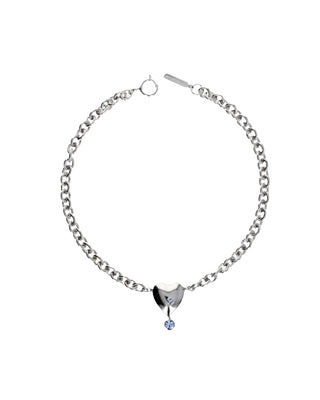
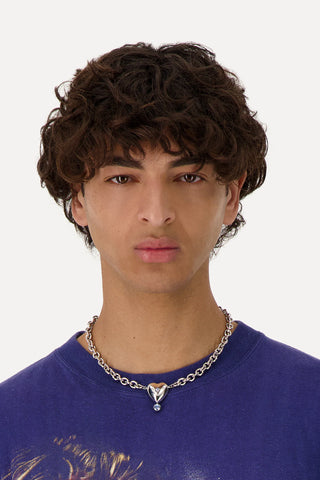
- Justine Clenquet — Max Necklace (Light Blue) by
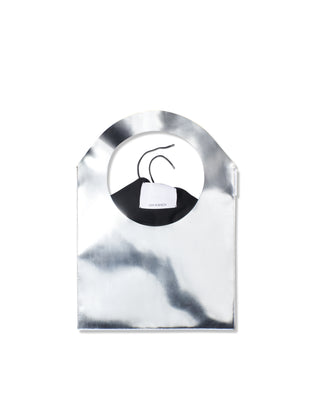
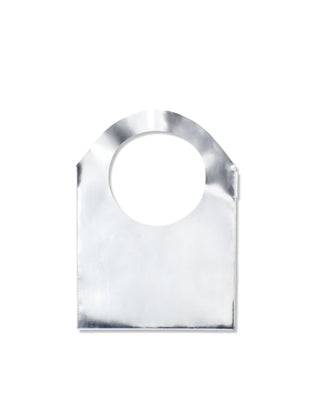
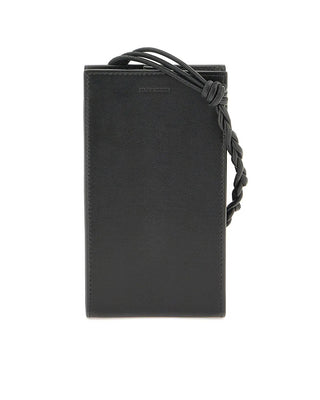
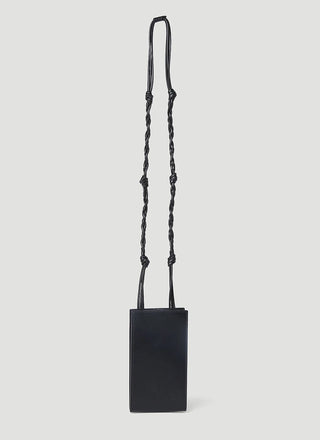
- Jil Sander — Tangle Leather Pouch Crossbody
- Lea Roesch — Bag Nr.4
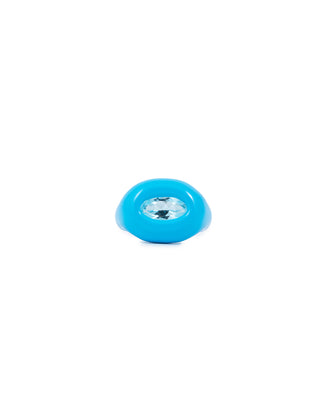
- Jupiter — Ring Lit Blue Topaz
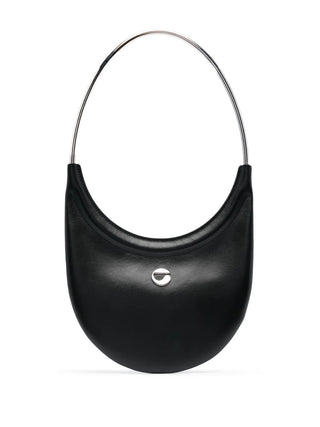
- Coperni — Black Ring Swipe Bag

KANG Domenico DOngmin during Milan Fashion Week by Darrel Hunter

Naz Kisnisci and Kang Domenico Donmin during Milan Fashion Week, shot by Jimin Jeon

Kang Domenico Dongmin is in Paris
From the outside, fashion often looks glamorous and effortless. What's the biggest lesson your career has actually taught you?
That the person who goes all the way to the end is the one who's left standing. Behind the glamorous moments there are countless hours no one ever sees. Even when I nearly lost everything in the early days of PAP Korea, what kept me going in the end wasn't talent or luck, it was the stubbornness of seeing through what I'd started. This industry, I think, is one where persistence, pushing your talent all the way through, ends up making the difference more than dazzling talent does.
Do you have a favourite saying in Korean? Write it in the original, and tell us what it means :)
I have a few.
First, "우물을 파도 한 우물을 파라" (umureul pado han umureul para). It means: don't test the waters all over the place, dig deep into the one goal you've set until you finally strike water.
Second, "칼을 뽑았으면 무라도 베어야 한다" (kareul ppobasseumyeon murado beeoya handa). This is something my father used to say to me every day. It means: once you've drawn your blade, don't let it fizzle out, settle it one way or another, cut something.
And it's not exactly a proverb, but there's a line from Jeong Ju-yeong, the founder of Hyundai, one of Korea's biggest conglomerates: "이봐, 해 보기나 했어?" ("Hey, have you even tried it?"). It means you have to actually throw yourself at something before you can know whether it's possible or not. It's a phrase I feel even more keenly running a business. The idea is: don't decide it can't be done, or that we shouldn't bother, before you've even tried. Something that felt difficult might turn out easier than you thought once you actually do it.
Finally, I always end with the same question. If you have one piece of advice for the young creatives trying to find their path today, what would it be?
I'd tell them: just try it. Most limits are built in your own head before you ever collide with anything. Twelve years ago, becoming a magazine editor-in-chief was an absurd fantasy for me too. So don't wait for the perfect preparation or the perfect moment. Even something you've made as perfectly as you can might not be perfect to someone else, so in the end, there's no such thing as perfect anyway. And one more thing: dig into your own thing, the thing you can do well. Like the saying goes about digging one well deeply, what moves the world in the end is the irreplaceable voice that only you have.
KANG DONGMIN'S PICKS