

Beyond Fashion Week: Daan Sachdev on Photography, Personal Style, and Coming Home to Bangkok
The first time Daan and I met was at a Dhruv Kapoor show in Milan years ago. Since then, we've followed each other's work from afar, occasionally crossing paths through fashion's surprisingly small world. It took a coffee at Roast in Bangkok to finally have a proper conversation. In this Open Talks interview, we discuss life behind the camera, the growing influence of Southeast Asia on the global fashion conversation, navigating fashion month between Bangkok, Milan, and Paris, and what it means to build a career while never fully belonging to just one place.
By Naz Kisnisci
18.08.2026
Hi Daan! We've been following each other online for years, and the first time we actually crossed paths in person was at Dhruv Kapoor's show in Milan, maybe 5-6 years ago! For readers meeting you for the first time, how would you introduce yourself and your background?
I'm Daan Sachdev, a fashion photographer born and raised in Bangkok, Thailand half Indian half Thai. My path into fashion wasn't exactly planned. I was studying science, but let's just say that didn't work out. I ended up going to graphic design college in Bangkok instead, and that's where my creative side really took over. Eventually, I moved to Milan to pursue fashion, and the rest kind of happened from there.
You were born and raised in Bangkok, studied graphic design, and spent years living in Milan. Bangkok is one of the most creatively alive cities in the world right now, sometimes chaotic, sensory, and constantly reinventing itself. How has this city shaped the way you see yourself and the way you work?
Bangkok gave me my foundation. It's where I grew up, where I learned how to navigate chaos, sit in traffic for three hours without losing my mind, and see beauty in the unexpected. Milan shaped a different side of me. That's where I became an adult, both personally and professionally. In a way, I grew up twice: first in Bangkok, then in Milan. Being raised in Asia and then moving to Europe gave me two very different perspectives, and I think my work lives somewhere in between.
And to push that further: what is your relationship with Bangkok, really? Not the version you'd give at a dinner party. What does this place actually give you, and what do you think most people fundamentally misread about it?
Bangkok will always be home for me. It's where I come to recalibrate and disappear for a bit. The funny thing is that Bangkok gives me peace and takes it away at the same time. It's chaotic, loud, and unpredictable, yet somehow it's where I feel most grounded. Maybe it's the food, maybe it's the foot massages, maybe it's both. I think what people often get wrong is that they see Bangkok as a party city. For me, it's the complete opposite. I spend so much of the year around people through work and fashion month that when I'm back in Bangkok, I mostly want to hide. My friends are probably tired of me saying no to dinner plans, but honestly, this is where I come to recharge, not socialize.
You carry both Indian and Thai heritage, move between cultures fluently, and speak multiple languages, each one a different register, a different version of yourself. How do those identities sit inside you, and do you ever feel pulled between them?
A hundred percent. Sometimes my brain is thinking in Thai, I'm speaking in English, and my emotions are running in Punjabi. It depends on my mood and who I'm talking to. I mix so many languages in one sentence that people no longer call me bilingual, they call me "bye-lingual" because all the languages seem to leave my head at the same time. Growing up between cultures is amazing, but it can also be confusing. I was born in Thailand, but I'm not fully Thai. I go to India, but I'm not fully Indian either. On a good day, it feels like I get the best of both worlds. On a bad day, it can feel like I don't completely belong anywhere. I think that's something a lot of people who grow up between cultures understand. For me, home is wherever my family is, but belonging is a more complicated question.

Daan during Milan Fashion Week shot by Chloé Rasquinet

Daan shot by Chloé Rasquinet

Daanat shot by Joel Kamacho
What were your childhood/teenage years like in Bangkok? Were fashion, photography, and image already part of your world then, or were you somewhere else entirely? And what about the city's nightlife, did that play a role in shaping who you became?
Fashion was around me long before I realized it. My family was involved in fabrics, tailoring, and garment trading, and one of my strongest childhood memories is hearing my grandma and dad packing boxes late at night before trips to India. Even now, the sound of packing tape brings back a lot of nostalgia. Photography definitely came from my mum. She always had a camera with her, and I think that rubbed off on me more than I realized at the time. As for nightlife, I started going out pretty young, but Bangkok's nightlife never really shaped me. If anything, it taught me that I'd rather be dancing than standing around a table holding a drink. Most of my nightlife memories and inspiration came later in Milan.
You've spent serious time inside Europe's fashion capitals, particularly in Milan. When and why did you make that move, and what was it like arriving as an outsider? What did Italy and Europe show you about fashion that genuinely surprised you, and or vice versa?
Honestly, I moved because something kept pulling me towards Milan. I can't explain it better than that. Arriving as an outsider was exactly that: I was an outsider. In the beginning, I spent a lot of time outside the shows before I ever found my place inside them. What surprised me most was the people. Fashion taught me very quickly not to put anyone on a pedestal. Some of the people I looked up to the most turned out to be disappointing, while some of the people who seemed intimidating at first ended up being incredibly kind and generous. It was a good reminder that fashion is just like anywhere else: never judge a book by its cover.
Southeast Asian fashion, and Thai creativity specifically, tends to be either overlooked or misread from the outside. What do people consistently get wrong about it, and what's actually happening here that the wider conversation hasn't caught up to yet? Any emerging Thai names you think deserve more attention?
I think people often assume Southeast Asian fashion has been overlooked because it's behind, but that's never been the case. The talent, craftsmanship, and creativity have always been here. The difference is that for a long time, we simply weren't being seen or heard by the wider industry.
What's changing now is visibility. More people around the world are paying attention, and they're realizing how much Thailand and Southeast Asia have to offer. I remember posting about a Thai silk event last year and having friends from the fashion industry message me saying, "I had no idea this existed." It's not that it was new, it just hadn't been part of the conversation. For a long time, we've been taught to look West for validation. I think people are finally starting to look in other directions, and that's long overdue. As for emerging Thai designers, I'll probably avoid naming names because it would be unfair to leave so many talented people out. I definitely have my personal favourites, but I'd rather encourage people to explore the scene for themselves. There's a huge amount of talent here, and I think we're only just beginning to see it get the attention it deserves.
You've been working with Vogue Thailand for many years. How did that relationship begin, and what role has it played in your career?
First of all, I'm incredibly grateful to the people I've worked with at Vogue Thailand over the years. The relationship actually started quite randomly. I met Vogue Thailand's Fashion Director at a Ferragamo show, sent her some photos afterwards, and neither of us realized the other was Thai. The rest is history. Working with Vogue has definitely played a big role in my career. It gave me credibility and introduced my work to a much wider audience. One thing it taught me is that people often see you differently when a well-known name is attached to your work. That's just the reality of the industry. But more than anything, I'm grateful for the trust, opportunities, and relationships that came from it. And for anyone wondering, it's been nothing like The Devil Wears Prada.

Miuccia Prada by Daan Sachdev

Chanel FW26 Fashion Show Shot by Daan Sachdev

Baz Luhrmann and anna wintour by daan sachdev
Your portfolio moves across Gucci, Acne Studios, Paco Rabanne, Fendi, and many others. You've been inside runway shows at every level, backstage, front of house, and everywhere in between. What does that work actually feel like from the inside? And when a new project, client, or collaboration comes your way, what makes Daan say yes or no?
From the outside, people often think fashion week is all glamour and fun. The reality is that it's also a lot of pressure, chaos, long days, and problem-solving. What people see is maybe 1% of what's actually happening behind the scenes. But when the work comes out the way you hoped, there's a moment of relief where you can finally look at it and think, "Okay, we did it." When it comes to new projects, I mostly go with my gut. Of course the work itself matters, but so do the people behind it. I like working with kind, genuine people who respect creatives and artists. I've learned that if something feels off from the beginning, it's usually off. So these days, I trust my instincts more than anything else.
You've shot some genuinely compelling faces, Heart Evangelista among them. When you're working with someone who has that kind of presence and style, how does that change the dynamic? What does a subject like that bring to the image that you can't manufacture?
Honestly, when I'm photographing someone well-known, I try very hard not to think about how famous they are. The moment I start focusing on their status, I get in my own head and that's when mistakes happen. So for those few minutes, they're not a celebrity, they're just my subject. Of course, some people have a natural presence that you can't really teach or manufacture. But what makes the biggest difference is authenticity. When someone is comfortable being themselves in front of the camera, that's when the strongest images happen. The fan in me can come out afterwards. First, I need to do my job.
Looking back across your work, which projects or collaborations have meant the most to you, and what made them feel different from everything else?
There have been a few moments that reminded me why I still do what I do. One of the most meaningful was Giorgio Armani's memorial show. For years, I had ended Milan Fashion Week with Armani, so being there for that final chapter felt incredibly special. It was one of those moments where you stop working for a second and just take it all in. I felt very lucky to be there. My first Chanel show was another one. Sometimes you spend years seeing these names in magazines and then suddenly you're there, experiencing it in real life. That never gets old. The third would be a Bulgari event in Rome. Not because of the scale of it, but because it was one of those projects that reminded me how far I've come. Every now and then, a job comes along that makes you pause and think, "Okay, this is why I stuck with it."
You have a very distinctive personal style, recognisable enough to feel like a signature. How conscious are you of that? Do you think personal taste is something you're born with or something you develop over time? And how much do you think the way a person dresses shapes how they're perceived by the world?
I think I do have a pretty distinctive style, whether that's a good thing or not depends on the day. Sometimes I walk into a room and feel like the odd one out. Other days, I'm completely owning it. I think most people who dress differently probably switch between those two feelings all the time. As for personal taste, I think it's something you develop. It evolves as you grow, travel, make mistakes, and figure out what actually feels like you. The way we dress definitely shapes how we're perceived, but for me it's never been about trends or labels. It's about feeling like myself. You can wear the most expensive outfit in the world and still feel uncomfortable if it isn't you. I also have a slightly ridiculous rule: if I leave the house wearing something and get hit by a bus, that's what my ghost has to wear forever. So I always make sure I'm happy with the outfit before I walk out the door.
Is there a dream project or collaboration living in your head that hasn't happened yet? What is it?
For me, it's photographing a magazine cover. I've been lucky to work on a lot of incredible projects, but shooting a cover and the editorial story that comes with it is still something that's living rent-free in my head. It's one of those goals that has stayed with me for years, and I hope one day I'll get to look at a magazine stand and think, "Okay, we did it."

Philippine Leroy-Beaulieu by daan sachdev

Before Gucci Fashion Show by Daan Sachdev

Lorena Schuett and Miu Natsha Taechamongkalapiwat by Daan Sachdev
Someone landing on your Instagram for the first time immediately encounters a very specific world and a very clear point of view. How important is that platform to your work and your identity as a creative? And for the people who find accounts like yours more intimidating than inspiring, what would you say to them? Should they be saying hi to you :)
Instagram has become incredibly important, not just for creatives but for almost every industry. In a way, it's the modern version of what television used to be. It's where people discover work, ideas, brands, and each other. Whether we like it or not, it's become part of how we communicate and exist professionally. As for my account being intimidating, I never really see it that way because I'm just posting things I genuinely like. But I've been told I can look a bit intimidating, so maybe there's some truth to it. If someone wants to say hi, they absolutely should. I don't bite. At least not on the first meeting.
What's your take on today's attention-driven social media culture? As someone working at the intersection of fashion and image, do you think building a serious creative career now also requires becoming an influencer? Or is there still another way?
I love this question because I think a lot of people starting out today feel like they have to become influencers. The truth is, not everyone can be, and not everyone needs to be. There's nothing wrong with trying, but I don't think success should be measured by how many people you're influencing online. What I find most interesting are people who are the same online as they are in real life. When someone's personality matches the person behind the screen, that's always more compelling to me than a perfectly curated persona. And yes, I still think there's another way. A strong online presence helps, but it doesn't have to come through influencing. At the end of the day, your work still matters. Make the work loud enough, and people will find it. Platforms change, algorithms change, but good work tends to stick around longer than either.
You've spent years moving between Southeast Asia and Europe, professionally and personally. What do you think people in each place consistently underestimate about the other?
I think Europe sometimes underestimates how much creativity and talent exists in Southeast Asia, while Southeast Asia sometimes underestimates itself and looks too often to the West for validation. Having lived in both places, I've realized we're all romanticizing each other a little bit more than we should.
You've seen some of the most stylish people in the world up close. Who genuinely impressed you with their taste and personal style?
I've met a lot of incredibly stylish people over the years, but one person who still lives rent-free in my head is Cardi B. Whatever people think of her, she really commits to fashion and isn't afraid to experiment. I love that. One moment that stuck with me was at a Vivienne Westwood show when she arrived late. Instead of disrupting the show or expecting special treatment, she stood by the photographers and watched the entire thing from there until it ended. I found that surprisingly respectful. And then, of course, there was the Schiaparelli couture show where she arrived carrying a live crow. That's Cardi B in a nutshell. Love it or hate it, she goes all in, and I have a lot of respect for that.
Fashion is often dismissed as superficial by those outside the industry. As someone who works across disciplines and has spent years inside it, how do you actually experience its depth? And do you think there's a common misunderstanding about fashion that still persists?
First of all, it's just fashion. We're not curing cancer. There are definitely bigger things in life. But at the same time, I think people are too quick to dismiss it as superficial. Fashion has always been part of how humans express themselves. It's been around for centuries, long before any of us were here, and it will probably outlive all of us too. From ancient civilizations to today, people have always used clothing to communicate identity, status, culture, and creativity. I think the misunderstanding comes from the fact that fashion is full of very visible, sometimes superficial people. They exist, of course. But behind that, there are also designers, craftspeople, artists, photographers, stylists, and countless others who genuinely care about what they do. So for me, fashion is both things at once: it's not that serious, but somehow it still is.
You're close with people like ideservecouture and others who are genuinely known in fashion. From the outside, those friendships look effortless. But how real are the connections you actually make in this industry, and is it possible to find genuine friendships inside fashion, or is most of it very convincing networking?
I've experienced both. Some people, like IDeserveCouture, became genuine friends very naturally and those friendships have lasted. Others are people I genuinely like and enjoy seeing, but our relationship mostly exists within the context of work, and that's okay too. Fashion is an industry where a lot of people are trying to build something, become something, or get somewhere. Networking is part of that reality. Pretending otherwise would be a bit naive. That said, real friendships absolutely exist in fashion. I've been lucky enough to find some. But I also think it's important to have friends outside the industry. Sometimes the best thing for your sanity is spending time with people who couldn't care less about who's sitting front row.
The idea of "luxury" is always evolving and changing in the fashion industry. How would you define luxury in fashion right now, and what does it personally mean to you?
Luxury means something very different to me now than it did a few years ago. These days, luxury is time, peace of mind, good health, and being able to take care of yourself and the people you love without constantly worrying. Sometimes luxury is as simple as not sitting in traffic for three hours. In fashion, I think the idea of luxury has become more complicated. A lot of products are made from similar materials and sometimes even come from the same places. What changes is often the story, the craftsmanship, the heritage, or simply the label attached to it. For me, true luxury isn't just about price. It's about quality, care, and the feeling something gives you. And honestly, there are fewer genuinely luxurious brands today than people might think.
Walk us through a regular day in Bangkok. And give us your real list: favourite spots for coffee, music, parties, shopping, books, good date spots, and hanging out. The ones only a local creative would actually know. (You can give 2-3 recs for each category! Serve us, please :))
My regular day in Bangkok is probably much less exciting than people imagine. If I'm not working, I usually start with the gym, come home for lunch with my family, and then spend the rest of the day running errands, reading, or hiding from people. For coffee, I'm very much a neighborhood person. I live around Sukhumvit, so I tend to rotate between local cafés close to home rather than chasing the newest opening every week. Some of my favourites are Patom Cafe, Pridi Cafe, and D'ark Cafe. Roast is my favorite brunch place. For shopping, I still find myself in Siam or EmQuartier, but I also love buying directly from local designers. Sometimes the best shopping happens in someone's studio, living room, or through a Grab delivery. As for books, Kinokuniya will always have my heart. I spend an unreasonable amount of money there and still somehow convince myself I need one more book. The party section is less useful because I barely go out in Bangkok. At this point, a good foot massage is probably more likely than a night out.
Favourite brands right now?
Right now, one of my favourite brands is sixthofOctober. It was founded by a Thai photographer whose work I've admired for years, and I wear a lot of pieces from the brand. It has always felt very personal to me. If we're talking about something more formal, my mind immediately goes to Tom Ford. There's something undeniably sexy about it. Ironically, I don't own much Tom Ford apart from some underwear and sunglasses, but I still admire the brand a lot. And then there's Carhartt. If I'm not dressing for an event or a fashion thing, I'm probably wearing Carhartt. I like things that are simple, functional, and relatively logo-free. At this point, getting dressed is basically putting on a uniform, and Carhartt has become that uniform for me. I have a feeling it'll outlive me.
What's your star sign? And do you believe in horoscopes?
I'm a Scorpio. Do I believe in horoscopes? Only when they're saying nice things about me. The moment they predict something terrible, I suddenly become very scientific and stop believing in astrology altogether. That said, I do find it fun. Whether it's real or not, I think it gives people a way to reflect on themselves, and that's never a bad thing.
Your style in five words.
Same silhouette, different postal code.
If you had to pick five favourite pieces from Balcone right now, what would they be?
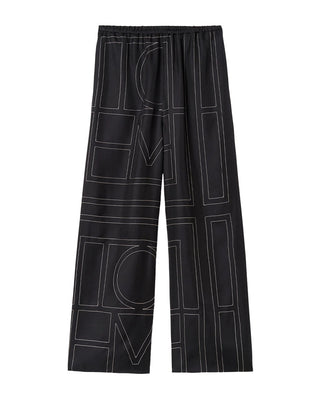
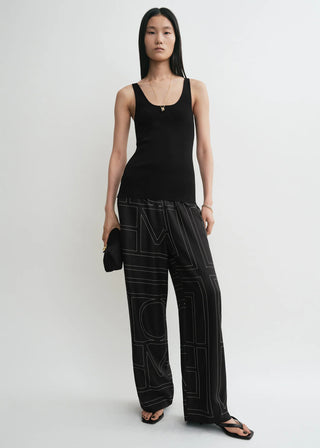
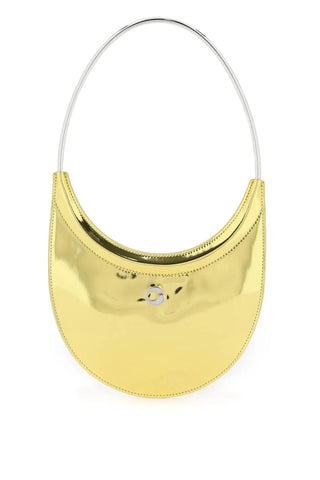
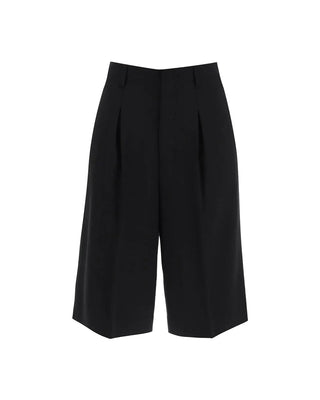
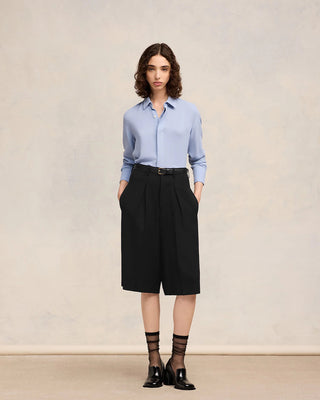
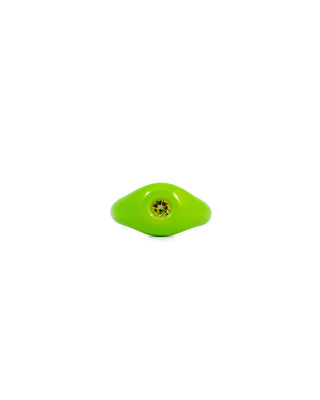
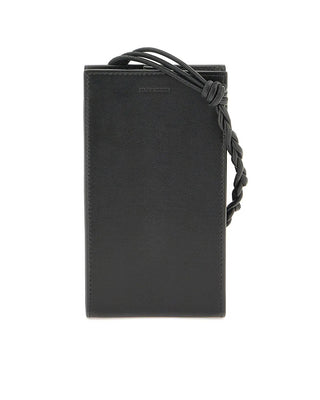
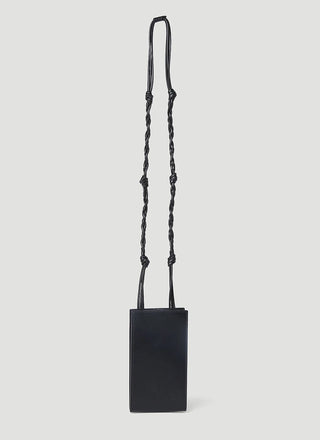
Jupiter Band Ring Mela ring, Coperni gold ring swipe bag, the Toteme silk lounge pants, Jil Sander black leather crossbody, and those gabardine Ami Bermuda shorts!
What's been playing on repeat lately?
Lana Del Rey! Always!
Current obsession, anything goes.
Books, Greek yoghurt?! Slippers for the summer. Comfortable underwear. Organic wine that doesn't give you a hangover.
If you could have coffee with anyone, past or present, who would it be, and what would you want to ask them?
I'd probably invite Princess Diana, Lana Del Rey, David Bowie, John Waters, and Amy Winehouse. It sounds like the beginning of a very strange coffee meet up, but I'd happily attend. As for what I'd ask them? Honestly, after spending years imagining the conversation, I think I'd sit down, look around the table, and say, "So… what's up, bitches?" After that, I'd probably just listen.

Alia Bhatt by Daan Sachdev

Nikita Vlassenko shot by Daan Sachdev

From the outside, fashion looks glamorous and frictionless. What's the biggest lesson your career has actually taught you?
From the outside, fashion looks glamorous. In reality, fashion taught me that half of Milan and Paris seem to be allergic to elevators, air conditioning, and fans. Nothing humbles you faster than carrying luggage up six flights of stairs and then assembling a fan in a 38-degree apartment because you thought Europe would be romantic. Jokes aside, the biggest lesson my career has taught me is not to force things. Over the years, I've learned that some opportunities can be chased endlessly and still never happen, while others arrive completely out of the blue and change everything. It sounds cheesy, but what's meant for you tends to find you, and what's not meant for you never really stays. My job has taught me to work hard, stay patient, and trust the timing a little more.
Both Indian and Thai culture run deep in you, even as you build something that exists between worlds. Do you have a favourite saying in any of your languages that you return to? Share it in the original, and tell us what it means.
I don't really have a favourite saying in Thai, but I do have a favourite song lyric that has stayed with me for years:
"อยู่ที่เรียนรู้ อยู่ที่ยอมรับมัน ตามความคิดสติเราให้ทัน อยู่กับสิ่งที่มีไม่ใช่สิ่งที่ฝัน และทำสิ่งนั้นให้ดีที่สุด"
A rough translation would be: "Learn to accept things with awareness and understanding. Focus on what you have, not only on what you wish for, and do the best you can with it." It's a little cheesy, but I think that's why I like it. The older I get, the more I realize life is less about chasing the perfect situation and more about making the most of what's already in front of you. On the Indian side, mine is much simpler: "Sanu ki?" in Punjabi. It basically means, "So what?" Whenever I find myself overthinking something, there's usually a voice in my head saying exactly that.
At Balcone, we're passionate about championing independent designers, emerging creatives, and alternative voices in fashion. In a city as vibrant and fast-moving as Bangkok, how important do you think platforms and communities like these are, and what role can they play in shaping the future of the creative scene?
Talent has always existed. Visibility is the hard part. That's why platforms like Balcone matter.
What's next for Daan? What should we be watching for? And what's your advice for young creatives who are just finding their way?
Next for me is Fashion Week. Womenswear is coming up, so my summer will be the usual mix of shows, deadlines, airports, and caffeine. For young creatives, I'd say this: be patient with yourself. Work hard, stay curious, and don't give up just because things aren't happening as quickly as you'd like. Most careers make sense looking backwards, not while you're living them. Just keep going and trust that the dots will connect eventually.
DAAN'S PICKS