

How Far Can a Jewelry Brand Travel from Italy? Letizia Bettoni on Building a Global Brand
Letizia Bettoni has a way of making things feel precise without ever feeling rigid. Italian at heart and instinctive by nature, her work sits at the intersection of art, fashion, and jewelry, with a clarity that’s immediately recognizable. We first discovered her brand JUPITER in 2022, and later met Letizia on a sunny winter afternoon in Milan, over lunch at LùBar, when the brand was still in its early days. Since then, JUPITER has grown into a bold, recognisable world, worn by names like Bella Hadid, Dua Lipa, and Rihanna, while continuing to expand beyond Europe. In this Open Talks interview, we talk with Letizia about building with conviction, creating pieces that hold presence rather than trend value, and why JUPITER feels like a brand worth paying attention to — and wearing — now. Scroll to read more.
By Naz Kisnisci
12.02.2026
Ciao Letizia! We’ve known each other since 2022, almost at the very start of Jupiter. We remember discovering your work on our explore page, writing to you immediately, and meeting for the first time at LùBar in Milan. For readers who are meeting you for the first time, how would you introduce yourself and your background?
I’m an Italian designer and creative director, and the founder of Jupiter. My background sits between fashion, art, and design, and I work mainly with jewelry and accessories as a space for experimentation. Jupiter was born from the idea of blending a contemporary, research-driven approach with Italian craftsmanship, creating pieces that live somewhere between object and story.
You were born and raised in Italy, studied art at Brera in Milan and fashion at IED Barcelona, and are now based in Brescia. In what ways has Italy, and this place in particular, influenced your identity and your creative process?
When I think about Italy’s influence on my practice, I can’t reduce it to a single aesthetic idea. It’s more a way of being present in the world. Growing up between Franciacorta and Lake Iseo taught me to think through images and sensations that stay with me. When I design, I instinctively return to certain smells, light on water, and shapes from childhood. From there comes the desire to transform memory into objects with an emotional life, not just an aesthetic one.
What were your childhood and teenage years like? Were fashion, jewelry and art already part of your world then, or did they arrive later?
I’ve always had a strong sense of identity, shaped by an energetic and curious character. At the same time, I loved getting lost in play, drawing, and imagination. I grew up believing that listening to myself was the most important thing, and that from there, everything else would fall into place. I explored many paths — from drawing to sculpture, from photography to fashion — and my grandmother often said: “Learn a craft and keep it with you.” For me, that phrase has always been true: creativity was never a phase, but a way of growing, something that seeps into how I live as much as how I work.

Letizia bettoni in her studio


JUPITER packaging
We know you’re very close to your mother. How has that relationship influenced your confidence, creativity, and the way you move through the world as a woman and as a woman in Italy?
My mother gave me, first of all, a deep sensitivity for beautiful things and the courage to follow what truly felt mine. Just talking about it moves me. Our relationship has always been built on support and exchange, sometimes even judgement, and it’s precisely out of this balance that my strength was born. Every milestone I reach is, in some way, also hers. She grew up in simplicity and built her life with passion and determination, always aiming for something more. Her example shaped how I stand in the world as a woman: with sensitivity, but without ever giving up strength of character. I couldn’t wish for a better role model.
Let’s talk about Jupiter. What’s the story behind the brand, and what does the name represent for you?
Jupiter was born in 2020, at a time when I was just beginning to take my first steps in fashion and jewelry. I was designing one-off pieces, following a very instinctive process from sketch to making. By sharing those early works online, the project started to grow naturally, thanks to interest from stylists, editors, and people who believed in my vision from the beginning. What began as a personal project slowly became a brand, halfway between fashion and jewelry. The name Jupiter is linked to my planet and its symbolic meaning: expansion, luck, energy. Choosing it in such an uncertain moment felt like giving the project a sign of strength and trust in the future.
Did you always know you were drawn to jewelry, rings, earrings, metals, pearls, or did that passion unfold over time?
It wasn’t a rational decision, but a natural direction. I came to jewelry the way you come closer to something that somehow already belongs to you. Shapes, metals, stones were not just aesthetic elements, but expressive possibilities.
How would you describe the Jupiter woman? Who is she to you?
I’ve never imagined the Jupiter woman as something distant from me. In a way, we resemble each other. She’s a woman who moves through moments, changes and contradictions. She isn’t defined by perfection, but by the presence she has with herself. She wears jewelry as an extension of who she is, in a natural way.

Bella Hadid is wearing blue topaz Jupiter ring

DUA LIPA IS WEARING PINK JUPITER RING

Rihanna is wearing a mix of Jupiter rings, blue topaz ring on her index finger
How do you see your role as a designer, and what is the message that you want to tell with Jupiter?
I don’t feel in a phase of definition, but of construction. Rather than having clear answers, today I have very precise questions. Jupiter is a space that moves along with me, growing with the way I feel and look at the world.
Your Instagram has this very distinct, minimal, clean aesthetic, almost architectural even. Do you see that as an extension of your personal style, Jupiter’s world, or both?
It’s both, but not as a strategy — as a consequence. I don’t think of social media as a showcase, but as a visual space consistent with the way I look at things. What I share reflects an attitude more than a defined style. It’s how I see and select the world.
What’s your take on today’s attention-driven social media culture? As a founder, do you think growing a brand requires being an influencer or working heavily with them?
We’re living in a culture of hyper-presence, where it feels like if you don’t constantly post, you disappear. I think social media is useful for being discovered, but that a real relationship is built only through research and strong ideas. I like to think of social platforms as something to explore rather than endure, almost like a game, where you test the limits of the platforms to create meaning and connection, online and offline. In the end, what truly makes the difference is the idea and human sensitivity.

Featuring bang ring pink and band ring gold topaz

Letizia's sketches of ring lit blue topaz

Colorful Jupiter rings are shown
Jupiter pieces have a very recognisable sensibility, a certain weight, curve, clarity, and quite specific colors. What drives those decisions for you? And what role do material and colour play in shaping that language?
Everything starts with a sense of presence: I understand that a form works when I feel it as full, when it has the right weight in space. Colour is an instinctive choice, but always grounded in research into tones. It’s never decoration, it’s language. Material also plays a central role. I initially worked with more plastic materials, then moved closer to traditional Italian jewelry and silver, looking for a medium that would allow me to work better with colour and resist over time. For me, form, material and colour must speak the same language.
You work with precious metals through sustainable processes in the goldsmith districts of Vicenza and Valenza. What does this mean in practice, and why did you choose this approach?
For me, sustainability means knowing how and where things are made. Working in Vicenza and Valenza means having a direct relationship with the people who make my pieces and choosing more conscious processes. I use metals that can be recovered and transformed, and I produce in controlled quantities with care. It’s a slower way of working, but one that aligns more closely with what I believe in.
Jupiter doesn’t follow seasonal collections. Instead, you create seasonless, enduring pieces. How do you think customers perceive this approach in a fast-paced, trend-driven world? Do you feel this philosophy is understood or still evolving?
It’s not for everyone, and that’s okay. In a fast-moving world, there are still those who look for something that lasts. I think this philosophy is understood by people who feel the need to slow down. For others, maybe it will come with time.
Jupiter’s pieces on Balcone, from the Pink, to Blue and Mela Rings, are bold in colour and attitude. Strong colour can feel intimidating, yet they sit effortlessly even on your minimal style. What do you think keeps them from feeling overwhelming?
I love colour, but I treat it with restraint. Rather than the main character, it’s an accent: a detail that gives identity without taking over. It’s this balance that makes it feel natural, even when it’s intense.
Jupiter operates at a high-end price point, yet the design feels intentional rather than commercial. How do you define luxury within the context of your brand’s philosophy or positioning?
For me, luxury is the work you don’t see. It’s designing from scratch, choosing materials, producing in Italy, and doing research. As a small brand, I take care of every detail, from the product to the packaging, all the way to how it’s communicated. Luxury, for me, is all of this together.
Jupiter has been worn by Bella Hadid, Rihanna, Dua Lipa, and others, yet you’ve never heavily centred your communication around these moments the way many young brands might. What’s your perspective on that? How did these placements happen, and how did you feel seeing them?
Every time one of them wore one of my pieces, it was a moment of great joy, not for the name, but because I knew there was someone with a strong eye behind that choice. I’m deeply grateful to the editors and stylists who have supported Jupiter over the years. But I’ve never seen these moments as a starting point; for me, they’re a result. I believe in the power of a consistent aesthetic and communication more than in celebrating names. Still, seeing my work recognised this way gave me important confirmation and encouragement to keep going.
The idea of “luxury” is always evolving and changing in the fashion industry. How would you define luxury in today’s world?
For me today, luxury is time. Time to do things well, to choose, not to rush after everything. It’s allowing yourself slowness, depth, and care. At the same time, I believe luxury in brands should also mean looking forward: an ethical and responsible way of working, without giving up quality.
You recently launched Casa Bettoni. Tell us about it. Is it connected to Jupiter or something entirely different? When did the idea surface, and what do you want it to stand for?
Casa Bettoni is my grandparents’ house on Lake Iseo, a 1960s Villa filled with light and silence. It has always been a place of memory, affection and suspended time. At some point, I felt the desire to share it, turning it into a living space for others while keeping the authentic feeling of an Italian family home alive. It reflects my way of thinking about spaces as places that shape how you feel. If Jupiter is a creative project, Casa Bettoni is the physical place where the same idea of atmosphere, hospitality and slowness takes form. I’d like it to be a place where you arrive and immediately feel elsewhere, and at home at the same time.
If you could describe Jupiter in five words, what would they be?
Presence · Matter · Form · Research · Space
What’s your star sign? And do you believe in horoscopes? :)
Sagittarius! More vibe than horoscope.
Your style in five words?
Simple · Tactile · Neutral · Elegant · Present
Fav city or cities to eat, shop, and see art?
I always choose Italy for food; it’s not a single city, but a constellation of recipes that change from place to place. Venice is where I go to slow down and get lost. New York is the city that feeds me art. Paris is where I’d like to be. Tokyo is the journey I dream of.

Ring pink gold featured and styled in Odda Magazine editorial, shot by Tom Blesch, styled by Mariaelena Morelli

RING LIT BLUE TOPAZ featured on ELLE USA Cover story, editor-in-chief Nina Garcia, shot by sharif hamza, styled by alex white, model Maty Fall Diba.

Jupiter pieces, ring lit blue topaz in the middle
If you had to pick five favorite items from Balcone right now, what would they be?
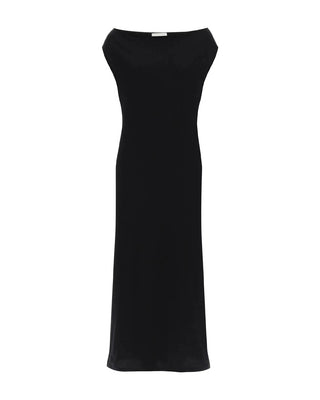
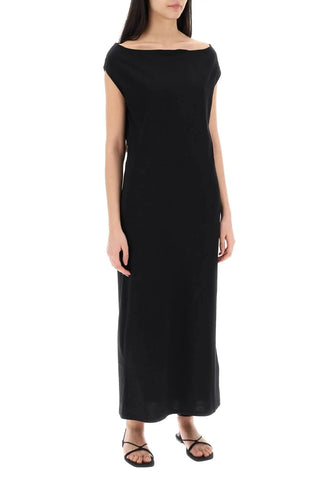
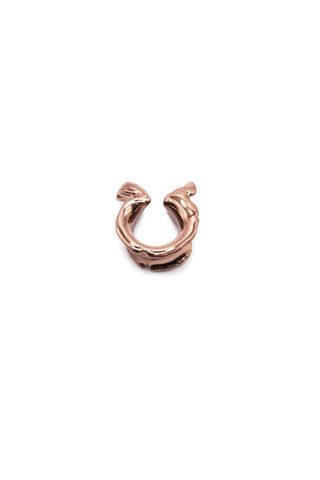
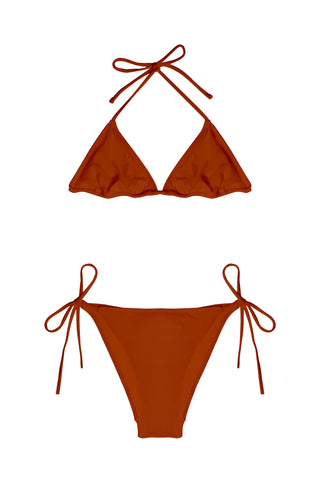
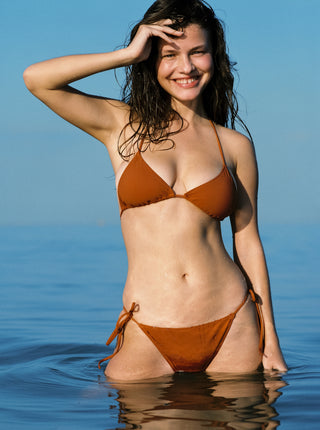
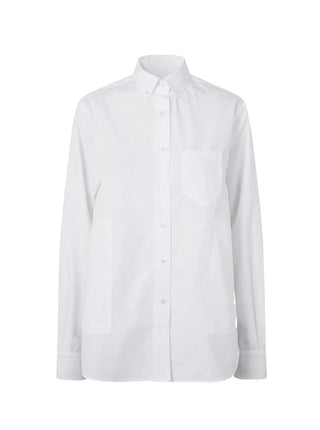
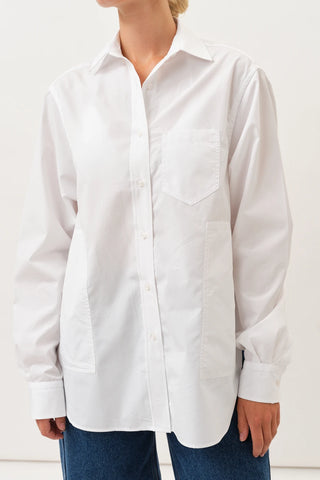
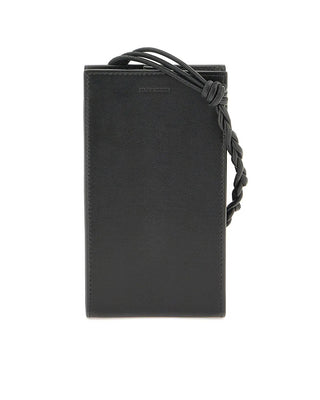
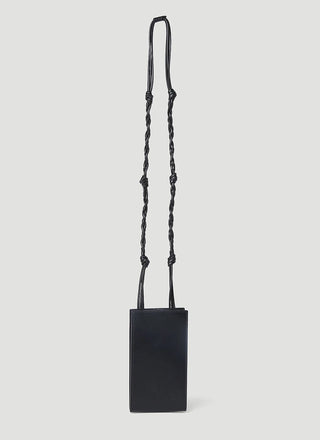
The Venti bikini by Lido, the Martial maxi dress by Loulou de Saison, the silver ear cuff by Défaïence, the white shirt by Saks Potts, and the Tangle Pouch by Jil Sander.
What’s playing on repeat for you at the moment/recently?
“Rossetto e cioccolato” — Ornella Vanoni
What’s your current obsession?
Collecting vintage books and magazines, especially architecture and design.
If you could have coffee with any woman, past or present, who inspires you, who would you pick, and what would you want to ask her?
I’d love to meet Elsa Peretti. I’d have too many questions to reduce to one.
From the outside, fashion looks glamorous and effortless. In reality, it’s full of twists and challenges. What has been the biggest lesson you’ve learned so far in your journey?
I’ve learned to go with the flow without taking everything too seriously, but without losing a sense of measure. To be light in expectations and rigorous in decisions. As we say in Italy, “never take a step longer than your legs”. And remember to enjoy it, otherwise, what’s the point?
Balcone introduces European designers to Southeast Asia, a region that’s curious, discerning, and increasingly influential. From your perspective as an Italian founder, what does it mean for Jupiter to be on our platform, and how do you imagine your pieces being discovered and worn there?
For me, it’s a wonderful opportunity to enter into dialogue with such a culturally vibrant part of the world. Balcone becomes a bridge between different contexts, a natural way for Jupiter to travel through ideas. I love the thought that, even far away, people can feel the care and love behind each piece. And I’m genuinely curious to see how they’ll be worn. I think an object finds its truest meaning when someone makes it their own.
What makes a piece of jewelry genuinely good, in your opinion?
When it moves across styles and seasons without losing meaning, when it brings joy and is chosen over time.
Italian culture shapes you deeply, even as you build a global brand. Do you have a favourite Italian saying, and why does it resonate with you?
“Una torta buona è una torta fatta con amore” — which means: “A good cake is made with love.”
What’s next for Jupiter? New pieces, new categories, collaborations, or sth else?
Right now I’m immersed in research. I’d like Jupiter to become a creative space where jewelry, design, fashion, and art freely intersect. I’m trying to let a language take shape.
At Balcone, we love championing emerging brands and independent talents. How does it feel to be part of the Balcone community?
I like being part of a platform that works through affinity and vision.
LETIZIA'S PICKS